President Reverses Ceasefire Optimism and Pulls Back Negotiators as Gaza Crisis Deepens
In a dramatic pivot from earlier diplomatic optimism, President Donald Trump has publicly urged Israel to escalate its military operations against Hamas, stating bluntly: “You’re gonna have to finish the job.” This marks a stark departure from Trump’s previous stance just weeks ago, when he suggested that a ceasefire deal was imminent and humanitarian aid would soon flow into Gaza.
Ceasefire Hopes Crumble: From Talks to Tensions
Earlier this month, Trump administration officials conveyed strong confidence in securing a ceasefire deal that would not only end the war in Gaza but also ensure the safe release of hostages and allow essential aid into the enclave. However, that momentum has abruptly stalled.
Trump’s Middle East envoy, Steve Witkoff, announced a pullback from the talks this week, citing Hamas’s lack of coordination and good faith. “We’re looking into alternative options,” Witkoff said, raising fears that diplomatic efforts may be collapsing just as Gaza’s humanitarian crisis worsens.
Trump’s Shift: A Tactical Bluff or Hardline Posture?
Whether Trump’s harsh rhetoric is designed to pressure Hamas into cooperation or reflects genuine policy is unclear. Some Western officials have suggested the president’s remarks could be a calculated effort to break the negotiation deadlock.
“I think they want to die, and it’s very, very bad,” Trump said of Hamas, adding, “You’re gonna have to get rid of ‘em.”
This hardline tone contrasts sharply with recent signals from Egypt and Qatar—key mediators in the negotiations—who described the recent setback in talks as “normal in the context of complex negotiations.”
A senior Israeli official echoed that sentiment, asserting that talks have “not at all” collapsed and insisting there remains hope for a breakthrough.
Humanitarian Catastrophe in Gaza
As the United States distances itself from mediation, Gaza is spiraling into an unprecedented humanitarian disaster. One UN official described the situation as producing “walking corpses,” with starvation reaching critical levels.
During a diplomatic visit to Tunis, Trump’s Africa adviser Massad Boulos was shown images of malnourished children by Tunisian President Kais Saied, who declared, “It is absolutely unacceptable. It is a crime against all of humanity.”
At home, Trump downplayed the US role in the worsening crisis, placing blame squarely on Hamas for obstructing aid. “We gave a lot of money,” he said, referring to a $60 million humanitarian contribution, “but we didn’t get any credit.”
However, a US government review found no evidence that Hamas had intercepted the aid.
Behind the Scenes: Netanyahu and Trump’s Uneasy Alliance
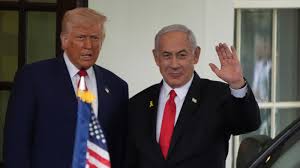
Trump’s frustration with Israeli Prime Minister Benjamin Netanyahu is growing. Sources close to the administration describe recent private conversations as “disappointing.” Still, Trump has refrained from publicly criticizing Netanyahu too harshly, instead reinforcing Israel’s right to defend itself.
“They’re gonna have to clean it up,” Trump said on Friday.
The White House remains tight-lipped about the specifics of their communications, but Trump’s remarks align with Israel’s apparent determination to continue its 21-month military campaign.
Strategic Calculations: Hostage Leverage and Negotiation Deadlock
A major sticking point remains the fate of hostages held by Hamas and the terms for a permanent cessation of hostilities. Trump believes Hamas, now holding fewer hostages, has lost leverage and is intentionally stalling.
“Now we’re down to the final hostages,” Trump said. “And they know what happens after you get the final hostages.”
US officials are quietly hoping Trump’s comments—and the temporary pullback from talks—will pressure Hamas back into meaningful negotiations.
International Repercussions and Growing Isolation
Global allies are beginning to diverge from Washington’s increasingly passive stance.
British Prime Minister Keir Starmer, who is scheduled to meet Trump in Scotland, condemned Israel’s “disproportionate military escalation” as “indefensible.”
Meanwhile, French President Emmanuel Macron announced that France would support Palestinian statehood recognition at the upcoming UN General Assembly—a move that angered Israel and drew criticism from US Secretary of State Marco Rubio, who called it “a slap in the face to the victims of October 7th.”
Trump appeared dismissive of Macron’s move: “He’s a very good guy. I like him. But that statement doesn’t carry weight.”
What’s Next? No Clear Timeline
Despite Trump’s assertion that his team will “do more,” no clear roadmap has been offered for resolving the crisis. State Department spokeswoman Tammy Bruce hinted at ongoing behind-the-scenes efforts but avoided offering any timeline.
“We’ve tried. The world has watched this,” Bruce said. “There are many tools in President Trump’s tool chest.”
As Gaza’s crisis reaches new lows and global criticism mounts, Trump’s evolving rhetoric—from dealmaker to wartime strategist—could define the trajectory of both the region’s future and his own legacy.