Executive Power Ascendant: A Court That Won’t Say No
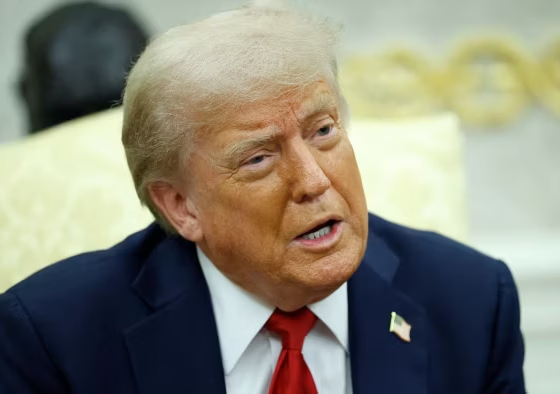
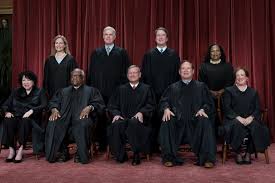
Six months into Donald Trump’s second term as President, the U.S. Supreme Court has displayed a consistent and striking pattern: It is not restraining his expansion of executive authority. Instead, its conservative majority has increasingly overridden lower courts, dismantled established regulatory protections, and cleared the way for controversial presidential decisions.
What we are witnessing is not simply judicial conservatism. It’s something more consequential: the Supreme Court acting as a buffer for executive power — and, in effect, for Trump himself.
From immigration rulings to regulatory dismantling and the unprecedented firing of independent agency officials, the highest court in the land is sending a clear message: it will not be the check on Trump that many expected — or hoped — it might be.
A Legal Turning Point: The New Role of the Court
From Watchdog to Enabler
Historically, the Supreme Court has functioned as a co-equal branch of government, designed to check presidential power. But recent decisions have flipped that role on its head.
-
Independent Regulators Fired: The court has allowed Trump to remove members of several independent regulatory boards — including the National Labor Relations Board (NLRB), the Merit Systems Protection Board (MSPB), and most recently, the Consumer Product Safety Commission (CPSC) — despite long-standing precedent protecting these roles from political firings.
-
Department of Education Dismantling: The Court also backed Trump’s effort to dissolve the Department of Education, despite clear arguments that only Congress has the authority to dismantle an agency it created.
Each of these decisions carries massive implications for corporate regulation, labor rights, and the balance of power between branches of government.
The Precedent Problem: Ignoring Legal Foundations
Humphrey’s Executor: Overlooked, But Not Overruled
One of the most troubling trends is the Court’s refusal to engage directly with Humphrey’s Executor v. United States (1935), a landmark precedent that limits the president’s power to remove members of independent agencies without just cause.
Rather than formally overturning the decision, the Court has quietly ignored it — creating legal confusion for lower courts, which remain bound by precedents the Supreme Court hasn’t officially reversed.
The conservative majority’s message? What we’ve done once, we can do again. As a recent unsigned order from the Court noted:
“The stay we issued … reflected our judgment that the Government faces greater risk of harm from an order allowing a removed officer to continue exercising the executive power than a wrongfully removed officer faces from being unable to perform her statutory duty.”
That sentiment effectively prioritizes executive control over institutional independence.
Birthright Citizenship: A Constitutional Flashpoint
The Case That Divided the Bench
In one of the term’s most pivotal decisions, the Court clipped the ability of lower courts to impose nationwide injunctions — a move with direct implications for Trump’s effort to end birthright citizenship, the constitutional guarantee of citizenship to anyone born on U.S. soil.
While the majority opinion, written by Justice Amy Coney Barrett, avoided endorsing Trump’s controversial policy outright, it significantly reduced the judiciary’s ability to prevent such policies from taking effect.
Barrett emphasized judicial restraint, writing:
“Federal courts do not exercise general oversight of the Executive Branch; they resolve cases and controversies consistent with the authority Congress has given them.”
But dissenting Justice Ketanji Brown Jackson responded sharply, accusing the majority of “shoving lower court judges out of the way” and enabling a dangerous transfer of power to the executive.
Dismantling the Department of Education: A Quiet Power Grab
Another seismic shift came on July 14, when the Supreme Court allowed the Trump administration to move forward with plans to dismantle the Department of Education.
Dissenting Justices — Sonia Sotomayor, Elena Kagan, and Ketanji Brown Jackson — highlighted the overreach:
“Only Congress has the power to abolish the Department.”
Secretary Linda McMahon’s plan to eliminate half the department’s staff was seen by the liberal justices as an overt and unlawful abuse of executive authority. Justice Sotomayor warned:
“When the Executive publicly announces its intent to break the law, and then executes on that promise, it is the Judiciary’s duty to check that lawlessness — not expedite it.”
The majority offered no written rationale, letting the administration’s moves stand without explanation.
Internal Fractures: A Court Divided
Justices Clash Over Tone and Doctrine
The court’s ideological divide is not merely theoretical — it’s increasingly personal.
In the birthright citizenship case, Justices Barrett and Jackson exchanged pointed barbs. Barrett dismissed Jackson’s argument as “rhetoric,” accusing her of presenting a position “tethered neither to any doctrine nor to any source.”
Jackson fired back, criticizing the majority’s reduction of the case to a “mind-numbingly technical query,” and accusing them of turning a blind eye to the real power grab — not by the courts, but by the executive.
These tensions have spilled into public remarks. Justice Sotomayor recently admitted to weeping in her chambers after some rulings. Justice Jackson expressed grave concern about “the state of our democracy” keeping her up at night.
Meanwhile, the conservative justices have shown no such public discomfort. Chief Justice John Roberts has remained firmly aligned with the majority’s decisions, backing even the most aggressive interpretations of presidential power.
What This Means for CEOs and Policy Leaders
For executives, policymakers, and organizational leaders, these judicial shifts require urgent attention.
Key Implications:
-
Regulatory Uncertainty: The weakening of independent agencies means fewer safeguards — but also less predictability. CEOs should brace for volatile regulatory environments that swing dramatically with political leadership.
-
Executive Overreach: The expansion of presidential authority could lead to sweeping policy changes enacted without Congressional oversight — from education to labor to consumer safety.
-
Legal Strategy Shift: Businesses may need to reconsider legal strategies, recognizing that lower court victories could be swiftly overturned by a Supreme Court increasingly deferential to the White House.
A Court Remade — For the Presidency, Not the People?
The U.S. Supreme Court is reshaping the relationship between law and power — subtly, but decisively. Its rulings suggest a vision of governance where presidential will outweighs institutional norms, where legal precedent can be bypassed, and where judicial accountability may be eroding.
In this new reality, the Court’s highest allegiance appears not to the Constitution’s checks and balances — but to the man currently occupying the Oval Office.