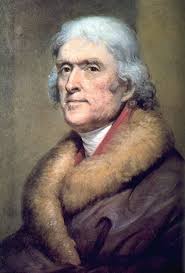
Founding Father’s Firebrand Letter Resurfaces: Jefferson on Arms, Democracy, and Revolution
A Forgotten Piece of History Unearthed in Time for Independence Day
A rare, handwritten letter from Thomas Jefferson, the principal author of the Declaration of Independence and third President of the United States, has resurfaced after being lost for more than half a century. Written in 1783, shortly after the end of the American Revolutionary War, the letter reveals Jefferson’s bold reflections on armed resistance, democracy, and the spread of revolutionary ideals across Europe.
Discovered just ahead of the Fourth of July, and coinciding with the 199th anniversary of Jefferson’s death, this remarkable document is now being offered for sale by the Raab Collection, a Pennsylvania-based dealer of historic manuscripts. Its valuation: $90,000.
A Revolutionary’s Voice Echoes Across Centuries
“The Momentum Is Toward Democracy, Not Royalty”
Penned on December 31, 1783, and addressed to Benjamin Harrison, then-Governor of Virginia, Jefferson’s letter is a snapshot of a moment when the United States had just thrown off the chains of British rule—and when Jefferson was closely watching Europe for signs of similar uprisings.
From Annapolis, then the temporary capital of the fledgling republic, Jefferson wrote about the unrest spreading through Europe—specifically citing the Dutch states, where citizens were rising against the autocratic regime of William V, Prince of Orange. Jefferson noted that of 80,000 men able to bear arms, nearly all were expected to “sign this demand” for reform.
According to Nathan Raab, principal of the Raab Collection:
“To see Jefferson, whose declaration of independence lit the spark of liberty in the western hemisphere, rejoicing that independence movements are gaining steam is powerful. It’s about as evocative an expression of the democratic right to bear arms as you can get.”
In an era where the modern gun rights debate often invokes the Second Amendment’s origins, this document provides raw insight into Jefferson’s belief that an armed citizenry could, and should, rise against tyranny.
A Letter That Almost Missed History
Missing for Decades, Now Back in Public View
This particular Jefferson letter was believed to be lost by scholars and archivists—including those at the University of Virginia, which manages the Jefferson Papers. It spent over 50 years in a private collection, hidden from historians until now.
Raab notes the rarity of such a find:
“We are not aware of any letter having reached the market from a signer—let alone the author of the Declaration of Independence—on the right of democratic citizens to bear arms and oppose autocracy.”
Jefferson’s words reflect a man both looking backward at the victory of American independence and forward to a world reshaped by revolutionary ideals.
Behind the Scenes: The Treaty That Cemented America’s Independence
A Frustrating Race Against Time and Weather
While Jefferson mused on the global wave of democratic fervor, the young American government faced a practical dilemma: ratifying the Treaty of Paris, the formal agreement that ended the war with Britain.
The treaty, signed in September 1783, needed to be ratified by at least nine of the 13 U.S. states and then sent back to London by March 1784. But as of Jefferson’s writing, only seven states had arrived in Annapolis. Jefferson’s frustration is clear:
“We have yet but seven states, and no more certain prospects of nine than at any time heretofore. We hope that the letters sent to the absent states will bring them forward.”
Raab adds context:
“It’s like standing at the finish line but waiting to cross. This wasn’t email—you needed weeks for messages to travel. Delegates were riding on horseback from distant locations through winter storms.”
Thankfully, delegations from Connecticut and South Carolina arrived in time, allowing the treaty to be ratified on January 14, 1784, and rushed across the Atlantic.
Jefferson: A Paradox of Liberty and Contradiction
Freedom for Some, Slavery for Others
While the letter portrays Jefferson as a champion of liberty and democracy, it also forces a reckoning with the contradictions of his personal life. Jefferson, despite his revolutionary ideals, enslaved over 600 people in his lifetime—more than any other U.S. president.
The resurfacing of this letter thus invites reflection not only on the philosophical foundations of the American republic but also on the deep inequities that were embedded in it from the beginning.
Jefferson’s vision of democracy was, at best, partial and selective. The same ideals he admired abroad and codified at home were denied to the people he held in bondage.
A National Symbol, A Global Message
Jefferson’s Letter: A Time Capsule of Revolutionary Energy
To historians and collectors alike, the value of this letter lies not just in its rarity, but in its timing and content.
-
It was written at a moment of global ideological shift.
-
It captures the intellectual aftershocks of the American Revolution.
-
It reflects early fears about whether the young U.S. would survive long enough to inspire the world.
Raab concludes:
“We can see the power and inspiration of Jefferson’s pen as he begins to reflect on the success of the revolution and witness democratic ideals spreading worldwide.”
In an age where democracy is again being tested around the globe—and where conversations about the meaning of freedom, governance, and civil rights remain front and center—Jefferson’s letter offers both a reminder and a challenge.
What Is Freedom Worth?
This letter may be worth $90,000 on the private market, but its true value is measured in ideas, influence, and contradiction. It reminds us that democracy is never handed down—it’s fought for, preserved, questioned, and, at times, redefined.
And for one of the architects of the American experiment, it’s a moment when he saw his dream of liberty take root—not just in the colonies, but across the world.