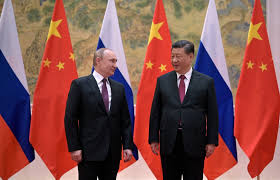
At a recent high‐stakes meeting in Brussels, China’s Foreign Minister Wang Yi conveyed a candid message to EU foreign affairs chief Kaja Kallas: Beijing views a Russian defeat in Ukraine as a strategic risk, fearing it would free the U.S. to focus more forcefully on China. This marks a rare and pointed admission of China’s geopolitical interests—clashing with its official stance of strict neutrality.
China’s Geopolitical Calculus — Why a Defeat in Ukraine Worries Beijing
U.S. Strategic Refocus
-
Wang argued that ending Russia’s war effort would allow Washington to redirect full diplomatic, economic, and military attention toward China—a scenario Beijing finds untenable.
-
His comments suggest a desire for Kyiv to remain entangled, ensuring U.S. resources remain focused westward—not on China.
Pragmatism Behind “Neutrality”
-
Despite public assertions of impartiality, this private admission reveals a far more calculated stance on Beijing’s part—one rooted in realpolitik rather than mere diplomacy .
Official Position vs. Private Messaging
-
China continues to state, via Ministry spokesperson Mao Ning, that it is “not a party” to the Ukraine conflict and staunchly supports ceasefire and negotiations reform.
-
In Brussels, however, Wang’s frank tone—appearing to lecture EU counterparts—signaled deeper strategic concerns.
Broader EU–China Diplomatic Tensions
Rare Earths & Dual‑Use Exports
-
Kallas pressed Wang over China’s export controls on rare earth minerals vital for European industry and concerns around dual-use exports fueling Russia’s war effort .
-
EU officials warned these supplies pose a serious threat to European security; Beijing has resisted, offering only modest administrative fixes.
Advance to the July Summit
-
With the EU‑China summit scheduled for July 24–25, this latest frank exchange is a clear sign both sides are setting a more assertive tone. The meeting’s agenda is shaping up to be tense.
Implications for Global Power Dynamics
Multipolarity vs. U.S. Leadership
-
China positions itself as a leader in a reshaped, multipolar world—balancing against a perceived U.S. pivot post‑Ukraine .
-
Yet, Wang’s veiled counsel to avoid letting Russia lose underscores a strategic tolerance for conflict that contradicts China’s standard diplomatic messaging.
Security & Global Supply Chains
-
EU criticisms touch on not only military dynamics but also critical supply‑chain risks tied to China’s rare earths exports—highlighting industrial vulnerabilities.
China’s candid warning to the EU—voiced by Wang Yi—is a reminder that global powers see the Ukraine conflict not just through a humanitarian lens but as chess pieces in larger strategic games. For corporate leaders, recognizing that supply-chain resilience and readiness for geopolitical shifts are no longer luxuries—they’re necessities. To navigate this, staying briefed on EU–China relations and contingency planning will be essential in the months ahead.