A Dangerous Turning Point in Middle East Tensions
In a bold and highly consequential military move, Israel launched a major airstrike on Iran early Friday, June 13, 2025, targeting nuclear and military facilities across the country.
The strikes, which shattered the long-standing shadow war between the two rivals, now risk escalating into a wider regional conflict with global implications.
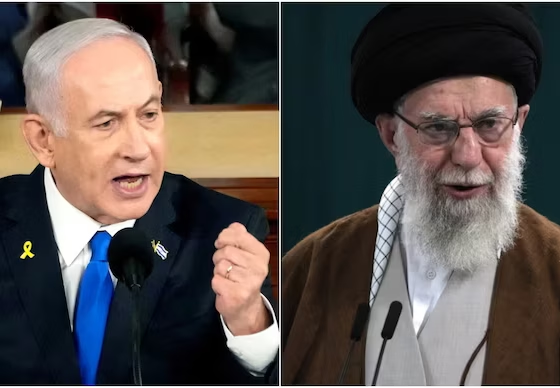
Explosions were reported across Tehran, with Israeli Prime Minister Benjamin Netanyahu confirming the attacks targeted Iran’s nuclear infrastructure and high-ranking military personnel.
Israeli Targets: Nuclear Sites and Military Leaders
Natanz Atomic Facility Hit in Precision Strikes
Israel claimed to have targeted Iran’s main nuclear enrichment center at Natanz, a facility that has long been at the heart of concerns over Iran’s nuclear ambitions. Netanyahu emphasized that the operation aimed to prevent Iran from acquiring a nuclear weapon, which Israel views as an existential threat.
Top Revolutionary Guard Commander and Nuclear Scientists Killed
Iranian state media confirmed the death of Gen. Hossein Salami, leader of Iran’s paramilitary Revolutionary Guard, in addition to two of Iran’s top nuclear scientists.
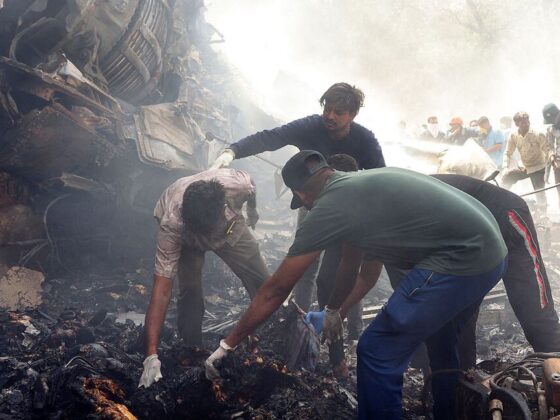
The Revolutionary Guard’s headquarters was reportedly set ablaze in the strikes, as residential neighborhoods across Tehran suffered collateral damage, with footage showing shattered windows and burning rooftops.
Israel Closes Airspace, Calls Up Troops
In anticipation of Iranian retaliation, Israel immediately closed its airspace and began mobilizing tens of thousands of reservists to protect its borders and critical infrastructure.
How Close Is Iran to Building a Nuclear Bomb?
Netanyahu’s Urgent Warning
Netanyahu claimed that Iran was only “a very short time” away from building a nuclear weapon, warning that immediate action was required.
However, nuclear experts suggest Iran may still need several months to develop a deliverable nuclear warhead, even if it chooses to weaponize its enriched uranium stockpile.
Iran’s Accelerating Nuclear Program
Tensions surrounding Iran’s nuclear capabilities have surged since the 2018 collapse of the Iran nuclear deal when then-President Donald Trump withdrew the U.S. from the accord.
Iran responded by increasing its stockpile of highly enriched uranium and threatening to open new enrichment facilities.
Just a day before the Israeli strike, the International Atomic Energy Agency (IAEA) censured Iran for failing to comply with nuclear nonproliferation agreements, further isolating Tehran diplomatically.
In retaliation, Iran announced plans to accelerate enrichment to 60% purity — a step closer to weapons-grade uranium.
Iran’s Key Nuclear Sites: Long a Flashpoint
Natanz and Fordo: The Core of Iran’s Nuclear Infrastructure
Iran’s nuclear program is centered around two main facilities:
-
Natanz: Built deep underground in central Iran, Natanz has been a frequent target of suspected Israeli cyberattacks and sabotage operations over the years, including the infamous Stuxnet virus.
-
Fordo: Located near the city of Qom and buried deep within a mountain, Fordo is heavily fortified but has less capacity compared to Natanz.
Both sites were previously focal points of international negotiations aimed at limiting Iran’s nuclear capabilities.
Trump Administration’s Diplomatic Push in Limbo
Before the attack, former U.S. President Donald Trump had backed a renewed diplomatic effort to curb Iran’s uranium enrichment through indirect talks. Trump reportedly cautioned Netanyahu against launching military action while those negotiations were in progress.
Scheduled nuclear talks in Oman, led by U.S. Special Envoy Steve Witkoff, now face significant uncertainty as Tehran weighs its next steps.
Iran’s Supreme Leader Vows Harsh Retaliation
Ayatollah Khamenei’s Threat
Iran’s Supreme Leader Ayatollah Ali Khamenei issued a strong warning in the aftermath of the strikes, vowing that Israel would face “severe punishment.”
“The powerful hand of the armed forces of the Islamic Republic will not let these attacks go unanswered,” Khamenei declared in an online statement.
Public Outrage and National Mobilization
State television broadcast images of Iranian citizens chanting “Death to Israel” and “Death to America” in massive street protests, signaling a sharp surge in public anger.
Iranian officials across the political spectrum have promised a swift and forceful response. Analysts warn that the next phase could involve cyberattacks, missile strikes, or proxy escalations via Hezbollah and other Iran-backed groups in the region.
U.S. Response: Denial of Involvement, Caution Against Retaliation
From Washington, Donald Trump quickly stated that the United States was not involved in Israel’s attack and warned Iran against retaliating against U.S. personnel or assets in the Middle East.
The Biden administration, now in opposition, urged diplomatic restraint and stressed the need to prevent further destabilization of the region.
What Happens Next?
The Israeli-Iranian confrontation has entered an unprecedented phase.
The immediate questions now are:
-
Will Iran retaliate directly or through its regional proxies?
-
Will nuclear negotiations completely collapse?
-
How will the international community respond to prevent a wider war?
With Israel’s airspace closed and Iran’s armed forces on high alert, the region teeters on the brink of a potential multi-front conflict involving Lebanon, Syria, and even the Persian Gulf.
Global leaders are calling for de-escalation, but the scale and visibility of Israel’s strikes mark a significant departure from the covert, deniable actions that have characterized this shadow war for decades.