A Catastrophic Blaze in the Heart of Eastern Iraq
In a devastating incident that has gripped Iraq, a massive fire ripped through the five-story Al-Kornish Hypermarket in the city of Kut, claiming the lives of 61 people, including men, women, and children. The tragedy, which unfolded on Wednesday, July 16, has shaken the nation to its core.
According to Iraq’s Ministry of Interior, most of the victims died of suffocation in the bathrooms, overwhelmed by thick smoke as the blaze spread rapidly through the building. Several of the deceased remain unidentified, and dozens more were injured or trapped during the inferno.
The shopping complex — which also housed a restaurant — had only been open for a week, underscoring deep concerns over Iraq’s enforcement of fire safety protocols in commercial developments.
Inside the Horror: Smoke, Panic, and Rescue
Flames Engulf the Mall as Rescue Efforts Race Against Time
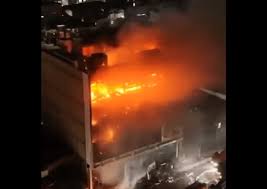
Video footage verified and geolocated by CNN reveals the entire building engulfed in flames, with smoke billowing from the rooftop as firefighters struggled to contain the blaze. Additional footage from local authorities showed emergency workers helping people crawl through small windows to escape the fire’s deadly grip.
Despite the terrifying circumstances, Civil Defense teams were able to rescue more than 45 individuals, exhibiting what the Interior Ministry called “remarkable dedication and courage.”
Official Response: Condolences, Mourning, and Accountability
Prime Minister Orders Investigation, Medical Support
Iraq’s Prime Minister Mohammed Shia al-Sudani has ordered a full-scale investigation into the incident, demanding that the Interior Minister and Civil Defense authorities identify the root causes of the fire and any possible regulatory failures.
A fully equipped medical team was dispatched to Kut, and the Prime Minister offered his deepest condolences to the families of the victims, calling the disaster “a deeply tragic incident that has shaken Iraq’s collective conscience.”
Interior Minister Promises Accountability
Interior Minister Abdul Amir Al-Shammari confirmed the formation of a high-level investigative committee tasked with “identifying all points of failure and responsibility.” He assured the public that any individuals or entities found to have acted negligently would be held legally accountable.
Wasit Region Declares Three Days of Mourning
Emotional Response from Local Government
Mohammed Jameel Al-Mayahi, the Governor of Wasit province, announced three days of official mourning for the victims. He confirmed that an initial legal case had already been filed against the owner of the building, and preliminary findings on the cause of the fire would be shared within 48 hours.
Pattern of Negligence: Not Iraq’s First Deadly Fire
A Troubling History of Fires Tied to Poor Safety
This latest incident is not an isolated event. Iraq has a troubling history of fatal fires caused by poor safety standards, outdated infrastructure, and weak enforcement of building regulations.
In April 2021, a fire at Baghdad’s Ibn al-Khatib Hospital killed more than 80 patients in a COVID-19 ward after an oxygen tank exploded. Two years later, in September 2023, a fire at a wedding hall in Qaraqosh claimed the lives of at least 100 people and injured 150 others.
Experts have consistently warned that electrical short circuits, flammable construction materials, and a lack of modern fire control systems make Iraqi buildings particularly vulnerable to deadly fires.
The Bigger Picture: Rebuilding Trust and Infrastructure
Iraq’s Infrastructure Crisis Comes Under Fresh Scrutiny
The Al-Kornish Hypermarket tragedy once again highlights Iraq’s deeply flawed safety enforcement regime, particularly when it comes to public venues. With rapid urban expansion across Iraqi cities, new commercial buildings are often opened without comprehensive safety audits, leaving them vulnerable to fire and structural risks.
Public Demands for Reform
Iraqis have taken to social media and local platforms to express outrage and grief, calling for criminal accountability, not just symbolic condolences. Many are demanding a complete overhaul of Iraq’s civil defense systems, including mandatory fire drills, modern alarms, and stronger oversight on electrical installations.
If the country’s leadership fails to act decisively, critics warn that Iraq risks repeating these preventable disasters — again and again.
What’s Next: Will Iraq Finally Act?
Legal and Structural Changes May Follow
While Prime Minister al-Sudani’s call for accountability is a welcome gesture, it remains to be seen whether lasting reforms will emerge from this tragedy. If Iraq is to avoid becoming synonymous with preventable mass-casualty events, its legal frameworks, enforcement bodies, and local authorities must prioritize human safety over bureaucratic inertia.