Europe’s Business Leaders Gather in Rome as Ukraine’s Fate Hangs in the Balance
Amid record Russian drone strikes and intensifying political uncertainty, European leaders and financial strategists gathered in Rome this week to hash out plans for the reconstruction of Ukraine—a summit overshadowed by fears that the country may be permanently split under an emerging US-led peace framework.
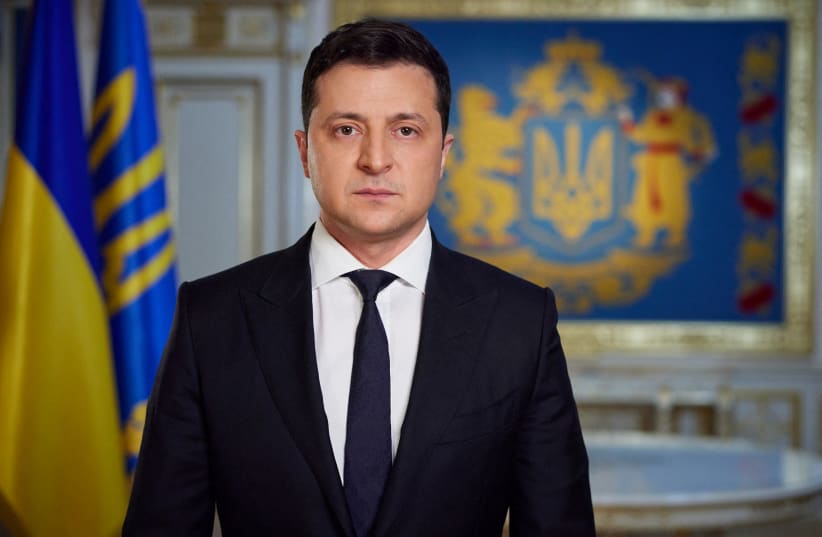
Ukrainian President Volodymyr Zelenskyy, along with German Chancellor Friedrich Merz, Italian Prime Minister Giorgia Meloni, and Polish leader Donald Tusk, joined the fourth edition of the Ukraine Recovery Conference. But instead of focusing squarely on private-sector investment and long-term recovery, discussions were dominated by economic shockwaves and geopolitical instability that could redefine Ukraine’s borders—and its financial burdens.
A War-Torn Economy Under Siege
Putin’s Drone Blitz and Its Economic Aftershocks
The meeting took place just hours after Kyiv came under fresh attack from a swarm of Russian long-range drones. Zelenskyy described the assault as part of a “calculated disruption” of both physical infrastructure and political diplomacy. German leader Merz was even more direct, condemning the strikes as “pure terrorism against civilians” and not military action.
These ongoing strikes are devastating Ukraine’s economic base. The World Bank has downgraded Ukraine’s 2025 growth forecast from 6.5% to just 2% amid rising inflation (currently at 15%) and falling industrial output. Housing, transport, and energy infrastructure remain the most damaged sectors, with direct losses surpassing $113bn across eastern Ukraine alone.
The $524bn Elephant in the Room
Four Regions, One Giant Cost
At the heart of the reconstruction challenge lies an uncomfortable truth: nearly half of the estimated recovery costs are concentrated in four Russian-occupied regions—Donetsk, Luhansk, Zaporizhzhia, and Kherson.
According to projections from Italy’s ISPI think tank, restoring these regions alone could cost $188bn. However, under a possible US-endorsed peace settlement that concedes these territories to Russia, a third of Ukraine’s recovery burden—close to $200bn—would technically fall on a Moscow that is already fiscally paralyzed.
The World Bank’s broader 10-year plan for Ukrainian recovery, scheduled to run from 2025 to 2035, estimates total investment needs at $524bn. But should these four regions remain under Russian control, economic divergence is inevitable. Kyiv would push ahead with European integration and recovery, while Russian-held areas would likely remain impoverished, lawless, and underdeveloped.
Private Capital Paralysis
Investors Stay on the Sidelines
Although the Rome summit was designed to catalyze private investment, few tangible deals emerged. Business leaders cited the continued drone strikes, uncertain peace terms, and regulatory ambiguity as reasons for withholding capital.
Kurt Volker, former US envoy to Ukraine, offered a scathing review: “These summits produce thousands of pages of vision, but zero results. Ukraine needs a permanent investment body—not conferences.”
Indeed, past conferences in Berlin (2024), London (2023), and Lugano (2022) have largely failed to mobilize significant private-sector engagement. Most funding has come from multilateral institutions and foreign governments, with little sign of sustainable growth strategies emerging from within Ukraine’s own economic policy framework.
Political Division Threatens Economic Unity
A Fractured Ukraine Means a Fragmented Recovery
If Ukraine is indeed split along the lines now being floated in peace discussions, the economic divide could become permanent. Experts warn of a “two-tier Ukraine”—a western region integrated with the EU and rebuilt through foreign direct investment, and an eastern region abandoned to Russian neglect.
Such a scenario would likely require international institutions to rewrite their assumptions on how recovery funds are allocated, how sanctions are imposed, and who bears legal responsibility for war-related damages.
The complexity is compounded by Russia’s refusal to engage. The Kremlin has dismissed the Rome conference and rejected a damning judgment by the European Court of Human Rights, which found Russia responsible for widespread violations in eastern Ukraine—including the 2014 downing of Malaysia Airlines Flight MH17.
Time Running Out for Meaningful Action
Despite the grim backdrop, there were calls for urgency and accountability. Zelenskyy reiterated that Ukraine’s fate must not be reduced to balance sheets or battlefield maps.
“We cannot talk about rebuilding schools if the buildings are bombed every night,” he said. “And we cannot secure long-term investment if the future of our borders remains uncertain.”
A Moment of Reckoning
The Rome summit was supposed to offer a blueprint for Ukraine’s rebirth. Instead, it exposed the fragility of that vision—undermined by territorial uncertainty, policy inertia, and mounting war fatigue.
With $524bn on the line and peace proposals demanding hard political compromises, Ukraine’s economic recovery now hinges not only on capital markets or development banks—but on geopolitics, moral clarity, and a world willing to enforce accountability.
As the drone war intensifies and the prospect of partition grows, so too does the challenge for leaders who want to invest in Ukraine’s future—without knowing where, exactly, that future lies.