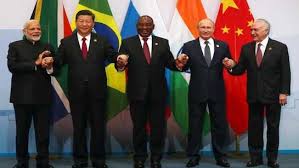
America vs BRICS – The Trade War Escalates
In a dramatic escalation of his global tariff agenda, President Donald Trump announced on Sunday that the U.S. will impose a 10% baseline tariff on all nations supporting the “anti-American” policies of the BRICS economic bloc—with no exceptions.
The timing is critical: his administration’s 90-day tariff freeze ends this Wednesday, July 9. Beginning today, over 100 countries will start receiving official “Tariff Letters”, outlining either pending tariff rates or final trade terms. Trump says these letters mark the return of reciprocal trade pressure—with force.
What’s at Stake: From Tariff Talks to Trade Wars
The BRICS group—originally Brazil, Russia, India, China, and South Africa—now includes Egypt, Ethiopia, Indonesia, Iran, and the UAE, with a dozen more partners like Thailand, Belarus, and Nigeria. These countries aim to realign the global order toward a multipolar system, reducing Western economic dominance.
But Trump views their ambitions as a direct threat to U.S. influence.
“Any country aligning themselves with the anti-American policies of BRICS will face tariffs. No exceptions,” Trump wrote on Truth Social.
He stopped short of detailing which BRICS policies crossed the line, but cited their push for local currency trade, criticism of U.S. sanctions, and recent condemnation of U.S. and Israeli strikes in Iran as red flags.
Countdown to Tariffs: July 9 Deadline Approaches
The White House is applying what Treasury Secretary Scott Bessent calls “maximum pressure.” Bessent confirmed the U.S. will resume tariffs on August 1 if countries don’t negotiate new deals before the July 9 cutoff.
“We’ll have most countries done by July 9 — either a letter or a deal,” Trump declared Sunday.
Trump and Bessent previewed the administration’s plan:
-
Letters are already being sent to 100+ nations—many small, trade-light economies.
-
Rates range from the current 10% baseline to up to 70% in extreme cases (though Bessent clarified that major trading partners like the EU and India are unlikely to face rates that high).
-
Countries not responding or engaging in negotiations may revert to April 2 tariff levels, some as high as 145%.
Three Deals Down, 97 to Go: The Trade Scorecard So Far
While Trump has claimed over 200 trade “deals”, only three nations have confirmed frameworks:
-
United Kingdom: Retained a 10% tariff rate.
-
Vietnam: Agreed to a minimum 20% duty.
-
China: Paused 145% tariffs to a temporary 30%.
“Many of these countries never even contacted us,” Bessent said, suggesting the U.S. holds all the leverage due to its persistent trade deficits.
BRICS Response: Tensions Rise Over Global Trade Realignment
As BRICS leaders gathered in Rio de Janeiro this weekend, their joint declaration was unmistakable: they voiced “serious concern” over unilateral tariffs and coercive trade measures—a direct criticism of Trump’s policy.
China, the most powerful BRICS member, responded cautiously.
“We oppose tariff wars and economic coercion,” said Chinese Foreign Ministry spokeswoman Mao Ning. “BRICS is about cooperation, not confrontation.”
Meanwhile, Trump’s previous threat to slap 100% tariffs on countries supporting a shared BRICS currency remains on the table—though the currency proposal has stalled.
What the Experts Say: Economic Fallout or Political Posturing?
Inflation, Trade Shocks, and Public Pain?
Former Treasury Secretary Larry Summers warned that tariffs will lead to higher inflation and diminished competitiveness for U.S. producers.
“They’ll collect revenue,” he said, “but the cost will be passed to consumers.”
Retail giants like Walmart have already signaled price hikes on China-sourced goods.
Tariff Defenders: “No Inflation, No Problem”
But Trump officials say fears of inflation are overblown.
“There is no inflation. That’s misinformation and tariff derangement syndrome,” Bessent argued Sunday.
Stephen Miran, Chair of the Council of Economic Advisers, added that tariffs haven’t damaged job creation or economic growth:
“Tariff revenue is pouring in. Job creation remains healthy. No sign of lasting economic harm.”
The Political Lens: Populism and Power Plays
This tariff offensive also plays well with Trump’s political base ahead of the 2026 midterms. His narrative is simple: America First, trade fairness, and no free rides for countries “working against U.S. interests.”
He’s already suggested that EU concessions came only after he threatened 50% tariffs, reinforcing the utility of “economic pressure diplomacy.”
“If you want to back to the old rate, that’s your choice,” Bessent warned countries on Sunday. “We’re not bluffing.”
Strategic Takeaway for CEOs and Global Investors
Key Risks:
-
Supply chain disruptions if trade tensions escalate.
-
Rising input costs for manufacturing, especially with China and BRICS states.
-
Increased volatility in emerging market currencies and global equities.
-
Tariff compliance burdens on multinational corporations.
Strategic Recommendations:
-
Conduct tariff exposure audits across key BRICS markets.
-
Reassess supplier networks—especially in Vietnam, India, and Indonesia.
-
Reprice goods and services now, anticipating up to 30% duty changes.
-
Watch the August 1 implementation date closely. Expect political fluctuations to influence enforcement.
New World Order or Economic Roulette?
Trump’s blanket tariff threat against BRICS-aligned nations marks a defining shift in how the U.S. is projecting power—not through military action or diplomacy, but economic coercion. For many emerging markets, it’s a clear ultimatum: align with the U.S. or pay the price.
Whether this strategy revitalizes American trade or sparks another global slowdown remains to be seen—but for now, the world watches and recalibrates.