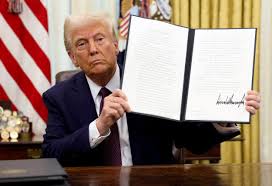
Trump Launches $20 Billion Libel Lawsuit Against Wall Street Journal Over Epstein Letter Claims
In an unprecedented legal move, President Donald Trump has filed a $20 billion libel lawsuit against the Wall Street Journal (WSJ) and its parent company, Dow Jones, over a controversial report involving convicted sex offender Jeffrey Epstein. The article, which alleged that Trump authored a birthday letter to Epstein in 2003 that included a drawing of a naked woman, sparked outrage and denials from the president — who says the letter never existed.
The lawsuit, filed in federal court in Miami, marks a dramatic escalation in Trump’s years-long war with the media, especially those outlets he claims are biased or publish “fake news.” This case comes at a moment of increasing pressure on Trump from his own base to fully reveal the extent of his ties with Epstein.
What Sparked the Lawsuit?
WSJ Report Details Alleged Epstein Gift
the Wall Street Journal published a report suggesting Trump’s name appeared on a note given to Jeffrey Epstein for his 50th birthday in 2003. The story also alleged the note contained a sexually explicit drawing. Notably, the publication did not release any image of the letter or the drawing, citing anonymous sources with access to the documents.
This omission, Trump’s legal team argues, is central to their case.
“The reason for those failures is because no authentic letter or drawing exists,” reads the lawsuit.
Trump, currently serving his second term in office, took to Truth Social shortly after the story broke, warning that Rupert Murdoch, whose News Corp owns the WSJ, had been personally told the letter was fake. Despite alleged promises to “take care of it,” the story was published anyway.
Legal and Political Implications
Uncharted Legal Territory for a Sitting President
Legal scholars say this may be the first time a sitting U.S. president has sued a media organization for libel while in office.
“As far as I can tell, no sitting president has ever sued a reporter or media outlet for defamation,” said First Amendment attorney Ted Boutrous.
Most presidents rely on the “bully pulpit” to correct or discredit unfavorable media coverage. Trump, however, has opted for the courtroom — a tactic that’s become part of his political brand.
A Pattern of Media Lawsuits
Trump’s lawsuit is just the latest in a string of legal actions against media outlets. Earlier in 2024, he sued ABC News over statements made by George Stephanopoulos about the E. Jean Carroll case. That lawsuit ended in a $16 million settlement paid by Disney, earmarked for Trump’s future presidential library.
Other notable settlements include:
-
CBS News: Dropped a defamation suit in exchange for $16 million.
-
Meta and X (formerly Twitter): Settled pre-2025 lawsuits over platform bans and content moderation.
Observers say these cases, taken together, point to a broader Trump strategy to intimidate or financially pressure media organizations into self-censorship.
The Epstein Factor
Renewed Scrutiny and MAGA Fallout
Trump’s connection to Epstein — a topic that has long dogged him — is back in the headlines. The Journal’s report comes amid increased pressure from right-wing influencers and MAGA-aligned activists demanding transparency over the late financier’s political connections.
Earlier this month, Trump’s Justice Department released a memo stating there is “no credible evidence” Epstein maintained a so-called client list involving powerful figures. The document disappointed many of Trump’s base, some of whom suspect a deeper conspiracy.
“He promised the truth about Epstein, and now we get redacted memos and vague denials?” wrote one MAGA-aligned blog this week.
The lawsuit may, in part, be an attempt to regain narrative control amid growing dissatisfaction within Trump’s base.
What’s Next for Trump vs Murdoch?
Depositions Could Shake Media and Politics
In his Truth Social post, Trump made it clear that Rupert Murdoch and other News Corp executives will be forced to testify.
“I hope Rupert and his ‘friends’ are looking forward to the many hours of depositions and testimonies they will have to provide in this case,” Trump wrote.
If the case proceeds to discovery, it could expose internal communications at the Wall Street Journal and News Corp — a move some say could deter future investigative journalism against powerful figures.
Legal experts are skeptical the case will ever make it to trial, citing the high bar for proving libel involving public figures. Trump would need to show that the Journal acted with “actual malice” — knowingly publishing false information or showing reckless disregard for the truth.
Whether the lawsuit succeeds or not, its symbolic power is undeniable. It reinforces Trump’s image as a fighter against the press, shores up support from his disillusioned base, and sends a message to other media outlets: tread carefully.
But it also raises serious First Amendment concerns and sets a potentially chilling precedent for how presidents engage with the press.
As University of Richmond law professor Carl Tobias put it:
“His attacks on the media undermine the First Amendment by making the media and others more cautious in covering Trump, his administration and other federal and state politicians.”
In the end, Trump may not need to win the lawsuit to achieve his goal — he may already have sent the message he intended.