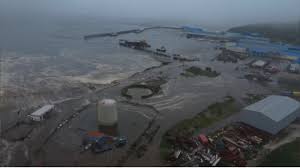
Russia’s Massive Quake Triggers Global Tsunami Response
8.8-magnitude temblor sends shockwaves from Siberia to San Francisco
A powerful 8.8-magnitude earthquake struck off Russia’s eastern coast late Wednesday morning (local time), triggering tsunami waves that rippled across the Pacific Ocean — affecting Russia, Japan, Canada, Hawaii, California, and Alaska. This seismic event now ties for the sixth strongest earthquake ever recorded globally, raising urgent questions about coastal resilience, disaster preparedness, and the effectiveness of international alert systems.
With over 2 million people temporarily evacuated in Japan alone, the quake serves as a sobering reminder of the global domino effects one seismic jolt can have.
Mapping the Quake and Tsunami Spread
From Kamchatka to California: Where the waves landed
The Epicenter — A Seismic Time Bomb
The earthquake struck in the Sea of Okhotsk, just off Russia’s remote Kamchatka Peninsula. Though the region is sparsely populated, the shockwaves triggered immediate tsunami alerts across the Pacific Rim, prompting mass evacuations, port closures, and emergency broadcasts as far away as Chile and New Zealand.
According to US Geological Survey (USGS) data, the quake occurred at a depth of approximately 34 kilometers, typical of subduction zone events known for generating massive tsunamis.
Hawaii Takes a Hit
Tsunami waves reached Hawaii with a maximum height of 5.7 feet, flooding low-lying areas and prompting emergency alerts. Though no major damage was reported, some tourists and residents on Maui spent the night in cars after evacuating to higher ground.
North America on Edge
The west coast of the United States also went on high alert. The northern California coast near the Oregon border was briefly placed under a tsunami warning — the highest level alert — but this was downgraded to an advisory by midday Wednesday (Pacific Time).
Canada’s British Columbia coastlines, long considered vulnerable due to tectonic proximity, also faced advisories, though no significant surges were recorded.
What the Warnings Meant — And How They Worked
Breaking down the alert system that may have saved thousands
Tsunami warnings and advisories were issued within minutes of the quake by agencies including the National Weather Service (NWS) and Pacific Tsunami Warning Center (PTWC).
Tsunami Warning vs. Advisory
-
A Tsunami Warning means widespread coastal flooding and strong currents are either imminent or already occurring, and evacuation is recommended.
-
A Tsunami Advisory signals the possibility of dangerous waves or currents near shorelines, though not necessarily large-scale flooding. People are urged to stay away from beaches, ports, and low-lying areas.
Both warning types were rapidly disseminated via sirens, mobile alerts, radio, and social media, demonstrating the increasing efficiency of public safety systems across Pacific nations.
Global Impact Beyond the Headlines
How island nations and coastal regions responded
Japan’s Massive Evacuation
Japan ordered the evacuation of nearly 2 million residents shortly after the quake was detected. Though the country ultimately avoided catastrophic damage, the rapid response showcased its world-leading disaster management protocols, honed through decades of earthquake and tsunami experience.
By Wednesday evening (Pacific Time), all tsunami warnings in Japan had been lifted.
Smaller Nations, Bigger Risk
The Marquesas Islands (French Polynesia), Galápagos Islands (Ecuador), Papua New Guinea, Solomon Islands, and Vanuatu also issued immediate tsunami alerts. For smaller island nations with limited elevation and infrastructure, even a 1-meter wave can prove catastrophic.
Fortunately, wave heights remained moderate, and no fatalities or severe flooding were reported.
A Tsunami Test — And a Pass
Experts praise speed and coordination, but call for vigilance
While the earthquake was among the most powerful in history, early signs suggest the Pacific tsunami alert network functioned optimally, giving millions of people precious time to evacuate.
No Casualties Reported in Russia
Despite the quake’s location just off the Russian coastline, no casualties were reported. Russian emergency services responded swiftly, issuing alerts and inspecting coastal infrastructure. The country’s remote eastern geography, with relatively low population density, may have helped mitigate the immediate impact.
Data to Shape the Future
Geophysicists and emergency planners are already analyzing real-time data from this quake to refine global tsunami models. Wave patterns from this event — including how they curved across the Pacific and lost energy near specific coastlines — offer critical insight for future preparedness.
Business and Infrastructure Impacts Still Unfolding
Ports, tourism, and local economies hit with temporary disruptions
Ports in Hawaii, Japan, and parts of the U.S. West Coast halted operations briefly, impacting trade flow and maritime logistics. Airlines rerouted flights, especially to and from Tokyo and Honolulu, and cruise lines delayed departures.
In Hawaii, tourism officials noted a significant — albeit temporary — disruption. Travel cancellations and emergency hotel closures highlight how quickly natural disasters can trigger economic aftershocks, even without direct damage.
Global Risks, Local Readiness
Why leaders must integrate earthquake-tsunami risk into continuity planning
This incident is a wake-up call for corporate and policy decision-makers operating in or near the Pacific Ring of Fire. Key considerations include:
-
Remote doesn’t mean irrelevant: A quake off remote Russian coasts still triggered alarms from Vancouver to Valparaíso.
-
Crisis communication readiness: Brands, institutions, and governments that responded fastest saw the least disruption.
-
Supply chain vulnerabilities: Maritime trade, tourism, and energy routes are all exposed to Pacific seismic risks.
Organizations with coastal operations or global logistics networks must reassess continuity plans, test emergency communications, and adopt geospatial alert integrations that respond in real time.
We Dodged a Bullet — But For How Long?
Wednesday’s 8.8-magnitude earthquake was a stress test for global tsunami preparedness. This time, technology, planning, and public responsiveness aligned to prevent mass casualties. But the quake also reminds us that the Pacific remains one of the most geologically volatile regions in the world — and the next event may not offer the same mercy.