Europe at the Crossroads: Xi’s Strategic Ultimatum
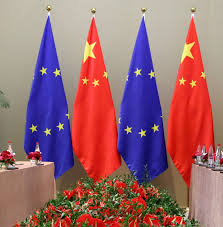
Chinese President Xi Jinping delivered a pointed message to EU leaders at today’s summit in Beijing: Europe must make the “right strategic choice”—deepening ties with China to bolster global stability amid mounting geopolitical uncertainty
Meeting with Ursula von der Leyen and Antonio Costa at the Great Hall of the People, Xi framed China-EU relations as a “constructive force” crucial to multilateral cooperation, urging the bloc to resist “walls, fortresses, decoupling or broken chains” and keep its markets open
Charting New Territory: A Summit of Tensions
A Summit Under Pressure
Originally scheduled as a two-day celebration of 50 years of diplomatic ties, the meeting was dramatically cut to one day—underscoring the strained dynamics between Beijing and Brussels With deep-rooted issues on trade imbalance, rare-earth restrictions, and China’s stance on the Ukraine war, expectations were muted
The Trade Imbalance: A €300 billion Lopsided Relationship
-
EU’s 2023 trade deficit with China reached an unprecedented €306 billion, prompting von der Leyen to call the relationship an “inflection point” and demand real solution.
-
Brussels has slapped tariffs on Chinese electric vehicles and launched probes into subsidies, provoking Beijing to retaliate with its own trade restrictions .
The Rare Earths Flashpoint
-
EU lawmakers recently condemned China’s export controls on critical minerals—key components for EVs, defense, and renewable tech—and urged domestic supply chain resilience .
-
The EU’s top priority at the summit: secure long-term or unrestricted rare-earth export licenses. Although Beijing introduced a “green channel” in April, progress has been slow .
The Ukraine Factor & Strategic Tagging
Europe also raised concerns about China’s continued support for Russia’s war in Ukraine. Xi, however, positioned China as a stabilizing force in the turbulent postwar environment .
Leaders Speak: A Delicate Balance
Xi’s Message: Openness Over Isolation
Xi cautioned that Europe’s challenges “do not come from China,” advocating for handling frictions responsibly and maintaining openness to avoid strategic isolation .
von der Leyen’s Call: Rebalance and Respond
Von der Leyen emphasized that deepening cooperation has amplified imbalances and insisted that China must bring forward real solutions to rebalance the partnership .
Why This Matters for European CEOs
-
Market Access: Tariffs on EVs and restricted rare-earth licenses threaten EU manufacturers and energy firms.
-
Supply Chain Security: Dependency on China for critical minerals could cause costly disruptions in automotive, aerospace, and clean energy sectors.
-
Geopolitical Complexity: Balancing U.S. pressure with economic ties to China complicates long-term EU strategic planning.
-
EU Autonomy: With U.S. tariffs looming, the EU must define its independent stance toward global trade partners.
What Happens Now?
-
Rare-Earth Deal: EU leaders will push hard for clarity on long-term export licensing and green-channel effectiveness .
-
Tariff Negotiations: Watch for diplomatic attempts to soften restrictions on EVs and dig into China’s retaliatory measures on EU goods.
-
Ukraine Engagement: Expect subtle pressure from Brussels on China to adopt a more constructive role in resolving the Ukraine conflict.
-
Joint Climate Statement: Despite friction, both sides are expected to endorse cooperative climate action, a rare locus of agreement.
Strategic Choices in a Disrupted World
Xi’s message to Europe is unambiguous: align with China to provide global stability—or risk isolation through protectionism. Yet, European leaders are pushing back, demanding reciprocity on trade imbalances, rare-earth transparency, and geopolitical alignment.
This summit is far from a diplomatic détente—it’s a pivotal moment. Europe must decide whether to anchor itself closer to China’s expanding economic orbit or to fortify its autonomy in an increasingly bipolar world.