Inside the Aid Crisis: Why 91 Million Meals Can’t Feed Gaza
The U.S.- and Israeli-backed Gaza Humanitarian Foundation (GHF) says it has achieved a “Herculean” feat—delivering 91 million meals in just two months. Yet the humanitarian situation in Gaza remains dire, with millions still hungry, thousands dead, and criticism mounting over the effectiveness of the new aid model that replaced the United Nations’ (UN) central role.
As Gaza’s humanitarian collapse continues, it’s becoming increasingly clear: a logistics miracle isn’t the same as a solution.
GHF’s Big Claim: 91 Million Meals Delivered
The Math Behind the Meals
GHF announced this week that it has distributed 91 million meals since its launch two months ago. On the surface, this sounds impressive—but a closer look reveals serious gaps.
-
Gaza’s population is approximately 2.1 million people.
-
91 million meals over two months equates to about 43 meals per person.
-
That’s enough for just 14 days of three meals a day.
Put another way: GHF’s distribution covers only 23% of the total food needs if each person were to eat three times a day during the two-month period.
And even that number assumes perfect distribution—which is far from the reality.
Distribution Bottlenecks: Centralized Aid, Decentralized Need
Limited Sites, Massive Crowds
Unlike the UN’s wide-reaching aid model—which utilized hundreds of distribution points across Gaza—GHF currently operates only a small number of aid sites, concentrated mainly in southern and central Gaza.
This limited network means:
-
Northern Gaza remains largely unreachable.
-
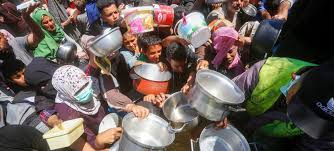
Massive crowds gather at limited GHF locations.
-
Tensions at these overcrowded sites have led to fatalities.
The UN reports that over 1,000 Palestinians have been killed by the Israeli military while trying to access food—including hundreds near GHF sites. While GHF disputes those numbers, the situation has drawn heavy scrutiny.
The UN Pushback: Aid Stuck at the Gates
Red Tape and Roadblocks
Although the UN has been sidelined under the new model, it still plays a limited role, attempting to distribute aid through what’s left of its infrastructure. However, it accuses Israeli authorities of obstructing this mission.
According to UN spokesperson Stéphane Dujarric:
“There are tremendous bureaucratic and security impediments. The Kerem Shalom crossing is not a McDonald’s drive-through where we just pull up and pick up what we’ve ordered.”
-
Truckloads of food are reportedly stuck at entry points.
-
UN staff face frequent delays, inspections, and denials of access.
-
Coordination between aid groups and Israeli forces remains fraught.
The logistical and political friction is undermining the entire aid effort, exacerbating starvation risks, especially in hard-to-reach northern areas.
A Humanitarian Crisis Redefined by Geopolitics
Replacing the UN: Efficiency or Optics?
The GHF was established with U.S. and Israeli support as a way to streamline aid, reduce perceived corruption, and operate independently from UNRWA (the UN Relief and Works Agency for Palestine Refugees), which has faced accusations from Israel and some Western nations of Hamas infiltration.
But critics argue:
-
The scale and trust networks of the UN are irreplaceable in the short term.
-
GHF lacks local knowledge, reach, and community trust in many areas.
-
The shift may have been driven more by political strategy than humanitarian effectiveness.
Meanwhile, Gaza’s civilian population continues to bear the brunt of famine-level shortages, skyrocketing food prices, and escalating military activity.
Human Cost: Aid Sites Becoming Conflict Zones
The GHF’s centralized model appears to be creating flashpoints for violence, rather than zones of relief. Multiple reports suggest that:
-
Civilians are being shot or crushed in aid-seeking chaos.
-
Israeli military claims some aid seekers are acting aggressively or threateningly, while Palestinians and rights groups dispute these narratives.
-
In the absence of safe and consistent distribution, black market food prices have surged, pushing aid further out of reach for Gaza’s poorest.
The humanitarian optics—Israel claiming to back aid, while simultaneously striking areas around distribution sites—have prompted global outcry and renewed calls for ceasefires and independent humanitarian oversight.
What Needs to Change
Key Solutions Experts Propose:
-
Re-integrate the UN’s distribution infrastructure, at least temporarily, to ensure wide access.
-
Open more crossing points with streamlined inspection protocols.
-
Deploy neutral observers to monitor both aid distribution and site security.
-
Create decentralized micro-distribution networks to reach families without centralizing risk.
-
Protect aid seekers under international humanitarian law, with verified safe zones.
Until these steps are taken, the GHF’s 91 million meals, while monumental in effort, may remain a footnote in a much larger humanitarian failure.
A “Herculean” Effort That Still Falls Short
There’s no denying the scale of the GHF’s operations. Distributing 91 million meals in a war zone is a logistical marvel. But numbers alone don’t feed people.
-
Aid must be accessible, safe, and consistent.
-
Humanitarian credibility depends on trust, not just tonnage.
-
And most of all, solutions must center civilians, not geopolitics.
Until that happens, Gaza will remain both a battlefield and a breadline.