A Game That Changed Perceptions
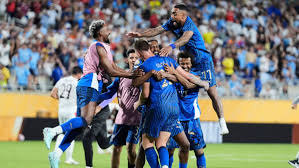
On a night when the footballing world expected another display of dominance from Manchester City, it was Saudi Arabia’s Al-Hilal that delivered the real statement. Their stunning 4-3 victory in the Club World Cup quarter-finals not only knocked out one of Europe’s most powerful clubs but also reshaped global football’s power dynamics.
For years, the Saudi Pro League (SPL) has been seen as a final payday for aging stars, a footnote in global football narratives. But Tuesday’s win in Orlando may mark the turning point where Saudi football no longer asks for respect—it demands it.
The Match: Underdogs No More
Despite facing a team brimming with talent, Al-Hilal took the pitch with confidence and cohesion, outplaying the Premier League champions in key phases of the game.
City, missing a few regulars and citing fatigue, still fielded a strong side featuring stars like Phil Foden, Rúben Dias, and Kevin De Bruyne. Yet, it was Al-Hilal who controlled midfield tempo, exploited defensive gaps, and outscored Pep Guardiola’s men in a dramatic, high-octane battle.
Key Highlights:
-
Kalidou Koulibaly, the Senegalese stalwart, commanded the defense and even found the net.
-
Rúben Neves and Sergej Milinković-Savić showed Premier League-level class in midfield.
-
Yassine Bounou, in goal, made several crucial saves that frustrated City’s frontline.
Al-Hilal’s Rise: Not an Overnight Sensation
While Tuesday’s result shocked casual fans, insiders knew Al-Hilal’s credentials were nothing to scoff at.
-
Four-time Asian Champions League winners
-
19-time Saudi champions
-
Runners-up in the 2022 Club World Cup, losing to Real Madrid in a competitive 5-3 battle
Far from being a Cinderella story, Al-Hilal’s dominance has been building, particularly since Saudi Arabia’s Public Investment Fund (PIF) acquired the club in 2023 as part of its sporting strategy.
Even amid adversity—Neymar’s departure, Mitrovic’s injury, coaching changes, and missing Salem Al-Dawsari, their best local player—Al-Hilal has proven to be resilient and tactically flexible under newly appointed Simone Inzaghi.
Global Power Shift: What Al-Hilal’s Victory Represents
This match wasn’t just a quarter-final. It was a symbol of shifting balance in global football:
-
European dominance challenged by a club from the Middle East.
-
Saudi Arabia’s strategy validated, with investments in infrastructure, talent, and development paying off.
-
The SPL’s legitimacy enhanced, no longer a “retirement league,” but a competitive force.
Interestingly, Al-Hilal fielded eight Saudi players, while City had only one Englishman (Foden) in their lineup. That’s not just a tactical win—it’s a philosophical one, suggesting long-term development of local talent in Saudi football.
Implications for Asian Football: A Rising Divide
While Al-Hilal soared, the rest of Asia stumbled at the Club World Cup:
-
Urawa Reds (Japan) lost all three games.
-
Ulsan HD (South Korea) exited without making an impression.
-
Al Ain (UAE) managed one win but were largely ineffective.
The contrast is stark and raises questions about the widening gap between Saudi clubs and the rest of Asia. The SPL dominated the last Asian Champions League, producing three of four semi-finalists.
The rise of Saudi football might elevate Asia’s profile, but it could also highlight internal disparities in resources, planning, and ambition.
Less Talk of Greed, More Talk of Greatness
The age-old criticism of players moving to Saudi Arabia—”they’re chasing money, not glory”—may need revisiting.
With top-tier infrastructure, world-class coaching, and now victories on the global stage, SPL clubs like Al-Hilal are proving that competitive ambition lives in Riyadh just as much as in Madrid or Manchester.
“Next time a player joins a Saudi club, the question won’t be about greed—it’ll be about whether he can help bridge the gap to Europe,” said one analyst after the match.
What Comes Next: Eyes on the Final
Al-Hilal now moves forward, with a possible rematch against Real Madrid on the horizon. But this time, they’re not happy to just be there. They expect to win.
If Al-Hilal do go all the way, it won’t just be a trophy—it will be a paradigm shift, signaling that the football world is no longer Eurocentric.
Football’s New Frontier
Tuesday night was about more than a game. It was a watershed moment, a reminder that football is no longer confined to old borders. And as Saudi Arabia’s footballing ambitions soar, it’s clear: the crescent moon is no longer in the shadow of Europe’s blue moon.