A Deepening Rift: Trump and Netanyahu’s Strained Alliance Exposed
President Donald Trump was reportedly taken by surprise last week after two major Israeli military actions — one in Gaza and another in Syria — triggered diplomatic fallout and renewed scrutiny inside the White House about the direction of U.S.-Israel relations under Prime Minister Benjamin Netanyahu.
According to multiple sources close to the administration, Trump personally intervened in both incidents, phoning Netanyahu directly to express frustration and to push for immediate damage control. The events have highlighted an increasingly strained relationship between two longtime allies whose mutual trust appears to be eroding amid the ongoing Middle East crisis.
Israeli Strikes Spark U.S. Backlash
Gaza Church Bombing Triggers Immediate Call to Netanyahu
One of the most controversial incidents occurred last Thursday when Israeli forces bombed the only Catholic Church in the Gaza Strip — an attack that killed at least three civilians, including a nun and two aid workers. The strike drew immediate condemnation from President Trump, who phoned Netanyahu directly to demand a public clarification.
Within hours, the Israeli government issued a rare statement calling the strike a “mistake,” reportedly at Trump’s insistence.
“This attack on a house of worship was unacceptable. The president quickly made that known,” said White House Press Secretary Karoline Leavitt in a briefing Monday afternoon. “He acted swiftly to rectify the situation.”
Damascus Strike Undermines U.S. Reconstruction Efforts
Just days before the church bombing, Israeli warplanes conducted airstrikes on key government buildings in Damascus, Syria — including one complex near the newly restored presidential palace. The attack reportedly blindsided Washington at a time when the Trump administration is easing sanctions and supporting Syria’s fragile transition under new President Ahmed al-Sharaa, a former rebel commander.
“The president enjoys a good working relationship with Bibi Netanyahu, but he was caught off guard,” said Leavitt. “This wasn’t coordinated, and it risks undermining U.S. progress in the region.”
The Trump-Netanyahu Relationship: Allies with Friction
Closeness on Iran, Coldness Behind Closed Doors
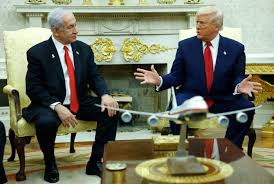
Despite being allies on paper, the relationship between Trump and Netanyahu has never been particularly warm, according to several administration officials. While the two leaders have worked together on major defense and diplomatic initiatives — including the controversial joint air campaign in Iran this summer — the personal chemistry remains frosty.
Earlier this month, during a state dinner in the White House Blue Room, Netanyahu publicly praised Trump and even presented him with a letter nominating the U.S. president for a Nobel Peace Prize. However, sources say the grand gestures have not masked the underlying mistrust between the two leaders.
“There’s a lot of theater when they’re together,” said one White House official. “But behind the scenes, it’s tense.”
Ceasefire Expectations Falter
Trump Left Empty-Handed After Netanyahu Visit
One of the major goals of Netanyahu’s four-day visit to Washington was to finalize a ceasefire deal in Gaza that would also include the release of Israeli hostages still held by Hamas. Trump, in public statements ahead of the visit, had expressed confidence that a ceasefire was imminent.
But the visit concluded with no agreement, and nearly a week later, Hamas has still not formally responded to the latest proposal from international mediators.
According to two sources familiar with the ongoing negotiations, the proposal includes:
-
A temporary halt to Israeli airstrikes in Gaza
-
The release of an estimated 35 Israeli and foreign hostages held by Hamas
-
Expanded humanitarian corridors and delivery of food, fuel, and medical supplies
On Monday, Hamas released a vague statement saying it was “exerting all our efforts and energies around the clock” to reach an agreement.
Trump’s Balancing Act in the Middle East
Growing Concern Over Civilian Death Toll
The latest civilian casualties — especially the church bombing in Gaza — have heightened Trump’s concern about the humanitarian cost of the conflict. According to Gaza’s health ministry, more than 1,000 people have been killed while attempting to access humanitarian aid since late May. Foreign ministers from 25 Western nations have also criticized Israel for “drip feeding” relief into the strip.
“The president wants the killing to end. He’s deeply disturbed by what’s unfolding on the ground,” said Leavitt. “This is a brutal conflict, and he’s focused on saving lives.”
Rubio’s Diplomacy in Syria Gains White House Backing
Secretary of State Marco Rubio has been spearheading diplomatic efforts in Syria, a theater where Trump is attempting to rebuild relationships and reconstruct national infrastructure after a decade of civil war. The Damascus bombing by Israel significantly complicated those efforts.
Rubio has held talks with Ahmed al-Sharaa and regional powers including Turkey and Egypt to stabilize Syria’s north and restart oil and agriculture exports — a plan that was gaining traction before last week’s airstrike.
Blaming the Past, Positioning for the Future
Leavitt: Trump Inherited a Mess, But Should Be Applauded
In her briefing, Press Secretary Leavitt was quick to lay blame for the current chaos on the Biden administration, which she accused of projecting “weakness” and allowing Middle East tensions to spiral.
“This is a very difficult and complicated situation that the president inherited. And I think he should be applauded for how he’s managing it,” Leavitt said. “He’s the reason aid is even reaching Gaza in the first place.”
Despite setbacks, the administration insists Trump remains committed to:
-
Ending the Gaza conflict
-
Supporting Syrian reconstruction
-
Protecting religious minorities and civilian populations
-
Preventing a broader regional war involving Iran and Hezbollah
Trump’s Red Lines and the Path Forward
The past week’s events have crystallized a shift in the White House’s tolerance toward Netanyahu’s military adventurism. For the first time since resuming office, Trump is openly correcting Israel’s moves — not just behind the scenes, but publicly.
Whether this results in meaningful policy change or simply more diplomatic showdowns remains to be seen. But one thing is clear: the Trump-Netanyahu alliance is no longer the unshakable bond it once was. And as the Gaza war rages on with no ceasefire in sight, the White House is recalibrating what kind of partner Israel is — and what kind of role the U.S. should play next.