Morale Plummets as Critics Warn of National Security Fallout and Legal Violations
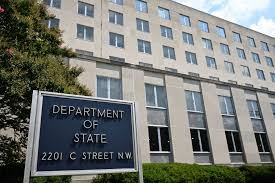
The U.S. State Department is in crisis mode after the Trump administration executed a sweeping series of firings, buyouts, and program cuts that have gutted its workforce and upended its mission. Nearly 3,000 employees have exited through layoffs and resignation incentives—moves critics are calling “unlawful” and ideologically driven.
Staff describe the agency as a “madhouse,” operating under fear and confusion as policy is increasingly dictated by hard-right ideologues, including a 26-year-old senior adviser with no diplomatic experience. Programs supporting LGBTQ+ rights, maternal health, and minority communities have been axed, while proposed budget cuts of 48% loom large.
Firings and Buyouts Rock the Agency
15% of Domestic Workforce Axed Following Supreme Court Ruling
On July 11, over 1,350 employees were issued Reduction in Force (RIF) notices after the Supreme Court lifted prior injunctions blocking the Trump administration from proceeding with the cuts. In total, about 3,000 staffers have left, including those who accepted early retirements or buyouts.
The State Department insists the layoffs comply with the law, citing the court decision. But legal experts and union representatives argue otherwise.
“This was not done within the confines of the law,” said Jose Mercado, a 29-year veteran who was deputy director in the Bureau of Democracy, Human Rights, and Labor. “There was no consulting, no analyzing. It was a top-down directive, rewritten to bypass lawful procedures.”
The American Federation of Government Employees, the federal workers’ union, is preparing legal challenges to contest the RIF process.
A Culture of Fear and Ideological Overreach
Meetings Censored, Veteran Employees Silenced
According to a current policy adviser, employees are now working under a culture of fear. “We were told to keep our heads down. Meetings with outside organizations or embassies had to be approved by bureau leadership,” the adviser said, calling it “unheard of” in the department’s history.
This internal clampdown coincides with a radical shift in policy priorities. Key foreign aid and human rights programs have been dismantled. Annual reports to Congress on human rights now omit references to reproductive rights, LGBTQ+ protections, and minority issues—purged by Trump appointees who claim such topics don’t align with “America First” principles.
The Rise of Far-Right Influence
Appointees Push Fringe Agendas on Foreign Policy Stage
Much of the State Department’s new direction is being shaped by a 27-year-old Trump appointee, Samuel Samson. Samson recently published a controversial article on a government platform attacking Europe’s immigration policies and defending far-right movements in the UK and Germany.
He has also proposed that the U.S. fund Marine Le Pen’s political movement in France—despite her facing criminal embezzlement charges. A recent South African trip by Samson, characterized internally as a “family vacation disguised as diplomacy,” focused on issues affecting white landowners rather than broader diplomatic objectives.
“They are pushing policies that have no basis in mainstream diplomacy,” said the anonymous adviser. “They’re cutting defenders of human rights to promote far-right ideologies that are both fringe and dangerous.”
Human Rights and Democracy at Risk
Watchdogs Silenced as Critical Functions Dismantled
Mercado warned that the dismissals are not just a blow to staffing—they eliminate essential oversight.
“Our department provided an outsider’s lens on policy decisions. We would flag human rights concerns before U.S. businesses or agencies engaged with questionable regimes,” he explained. “Without that check, we open the door to unsavory practices.”
He fears a collapse in institutional memory and decision-making rigor. “We’re losing career experts who’ve worked through multiple administrations. That’s not something you rebuild overnight.”
National Security Threats Loom
Even Defense Officials Sound the Alarm
The ripple effects of these State Department cuts are beginning to reach other arms of government. Former Defense Secretary Jim Mattis famously told Congress: “If you’re not going to fund the State Department, you better buy me more bullets.” That warning now appears prescient.
The Department of Defense has expressed concern over the weakening of America’s diplomatic capabilities. National security depends on stable foreign policy infrastructure—one now hollowed out and politically restricted.
“These aren’t just bureaucratic shifts. This affects how we negotiate, respond to crises, and represent American values abroad,” said the adviser. “The risks to long-term global stability are real.”
No Guidance, No Direction, Just Cuts
Employees Left in the Dark Since Inauguration
Mercado described a breakdown in communication that began immediately after Trump returned to office in January 2025. “There was no direction given. No memos, no briefings. It was as if they didn’t want us working at all.”
The silence was soon followed by rumors—then mass dismissals.
USAID was dismantled, and the Foreign Service, which many assumed would be spared, was hit hard. “That’s when we realized the civil service wasn’t the only target. It was the entire institution of diplomacy,” Mercado added.
Long-Term Implications: Damage Beyond Repair?
Institutional Collapse Could Undermine U.S. Global Influence
The current strategy appears less about reform and more about ideological domination. By removing seasoned professionals and replacing them with politically loyal operatives, the Trump administration is reshaping U.S. diplomacy in its image—one that critics say is more isolationist, combative, and anti-humanitarian.
“There’s irreversible damage being done,” the adviser warned. “We’re cutting off relationships, degrading trust with allies, and empowering global extremists through silence.”
At its core, the transformation is not just administrative—it’s philosophical. The State Department, long a defender of liberal democracy and human rights, is now being leveraged as a mouthpiece for fringe nationalism and conspiracy-laced ideology.
Diplomacy in the Age of Purges
The State Department is bleeding institutional knowledge, morale, and global influence—all at once. The Trump administration’s aggressive cuts, rapid restructuring, and ideological reshaping have sparked legal battles, internal despair, and international concern.
As lawsuits proceed and more stories of internal chaos emerge, the long-term effects on U.S. foreign policy may be felt for decades. For now, insiders describe the department as unrecognizable—and the world is watching.