From Disaster Memory to Legislative Action
Nearly 15 years after the Deepwater Horizon catastrophe, the scars it left on Florida’s Gulf communities remain fresh—especially in Apalachicola Bay, an ecological and economic gem in the state’s northwest. The BP oil spill never physically reached its shores, but the threat alone was enough to devastate tourism, shutter businesses, and collapse parts of the shellfish industry.
When the Florida Department of Environmental Protection (DEP) issued an exploratory oil drilling permit in 2024 to Louisiana-based Clearwater Land and Minerals, the community didn’t wait for disaster to knock twice. Instead, they mobilized. The result: a rare and powerful grassroots win that not only overturned the permit but led to House Bill 1143, a permanent legislative ban on oil drilling within 10 miles of critical estuarine reserves in rural Florida.
Even more stunning? Governor Ron DeSantis signed it into law.
The Flashpoint—A Drilling Permit on Sacred Ground
Clearwater’s Proposal Sparks Outrage
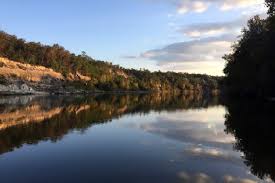
The permit would have allowed Clearwater to begin oil exploration along the Apalachicola River basin, a region where three rivers converge to form a lifeline for oyster farmers, fishermen, and tourism-dependent towns. Although legally issued, the permit was met with immediate resistance.
The nonprofit Apalachicola Riverkeeper, with support from other groups and residents, formed the Kill the Drill coalition. Their goal was clear: revoke the permit and prevent future threats to the region’s water resources.
“We’ve seen what can happen,” said State Rep. Allison Tant, co-author of the bill. “This is not theoretical. It was a perilous time for small businesses and for those who lived in the area.”
A United Front—Environmentalists, Politicians, and Business Owners Join Forces
From Fishermen to Farmers to Lawmakers
Support for the coalition wasn’t just environmental. The region’s economy—particularly its shellfish aquaculture industry—was directly in the crosshairs.
“The majority of the state’s oyster farms operate in counties downriver,” said Adrianne Johnson, executive director of the Florida Shellfish Aquaculture Association. “A spill upriver would be catastrophic—not just environmentally, but economically. These effects would be felt for generations.”
With industries and community leaders aligned, the political wheels began turning. Jason Shoaf, a Republican representing Florida’s northeastern Gulf coast, joined forces with Democrat Tant to co-author HB 1143.
“This bill protects our precious water resources and the ecosystems that depend on them,” Shoaf stated. “The permit was denied, but we can’t assume the next one will be.”
What HB 1143 Does—and Why It’s a Game-Changer
Permanent Ban with Teeth
HB 1143 is not symbolic. It includes:
-
A 10-mile buffer zone around national estuarine research reserves in designated rural counties.
-
A ban on oil and gas exploration, drilling, or production in these zones.
-
A mandate for the Florida DEP to ensure proper natural resource protection in case of accidents.
The bill passed nearly unanimously—just one dissenting vote in the Senate—highlighting rare bipartisan support in a state known for sharp political divides.
“This region has a deep collective memory of how the Gulf oil spill devastated our economy,” Johnson explained. “We’re not just fighting for water—we’re fighting for our livelihoods.”
Why DeSantis Signed It—Despite His Environmental Track Record
A Surprising Signature
Governor Ron DeSantis, not known for environmental leadership, signed the bill into law in June 2025. The move surprised critics who’ve accused his administration of cozying up to the fossil fuel lobby and undermining clean energy policy.
“The political calculus may have changed,” said Craig Diamond, board member of Apalachicola Riverkeeper and former Florida Water Management District official. “It’s a smart play ahead of any national ambitions he may still have.”
It’s also a move that aligns with DeSantis’ broader messaging about protecting Florida’s “natural heritage” for tourism and local jobs—especially in a hurricane-prone region where oil spills could turn natural disasters into economic Armageddon.
“A spill caused by a hurricane would make a disaster 100 times worse,” Tant added.
Lessons from the Past—Why the Deepwater Horizon Still Haunts Florida
The Cost of One Spill
According to the National Oceanic and Atmospheric Administration (NOAA), the 2010 BP oil spill:
-
Killed 8.3 billion oysters
-
Led to the deaths of 105,400 seabirds
-
Decimated 7,600 adult and 160,000 juvenile sea turtles
-
Reduced dolphin populations by 51% in parts of Louisiana
These staggering numbers don’t even account for economic losses. In Apalachicola, it was the fear—not the presence—of oil that kept tourists away and devastated fisheries.
“Just the threat was enough to shut us down,” Shoaf said. “This bill ensures we don’t ever get that close again.”
Environmental and Economic Win—A Rare Example of Smart Policy
HB 1143 is now seen as a model for regional environmental policy—balancing economic risk with ecological protection. It also highlights how bipartisan, local-led movements can still cut through political gridlock.
For the 350+ shellfish farmers, eco-tour operators, and fisheries in the region, the bill is more than protection—it’s a promise.
“Permitting oil drilling in ecologically sensitive areas is within our control,” Johnson emphasized. “And we controlled it.”
A Blueprint for Local-Led Environmental Policy
The Apalachicola drilling ban isn’t just a regional victory—it’s a blueprint for how communities, businesses, and lawmakers can push back against environmentally risky ventures.
From disaster memory to legislative reform, Florida’s Kill the Drill coalition proved that local activism still has the power to reshape state policy—even against the weight of big oil.